
Connecting with kindness.
It’s my practice. I’d love to have you join.
1
Front
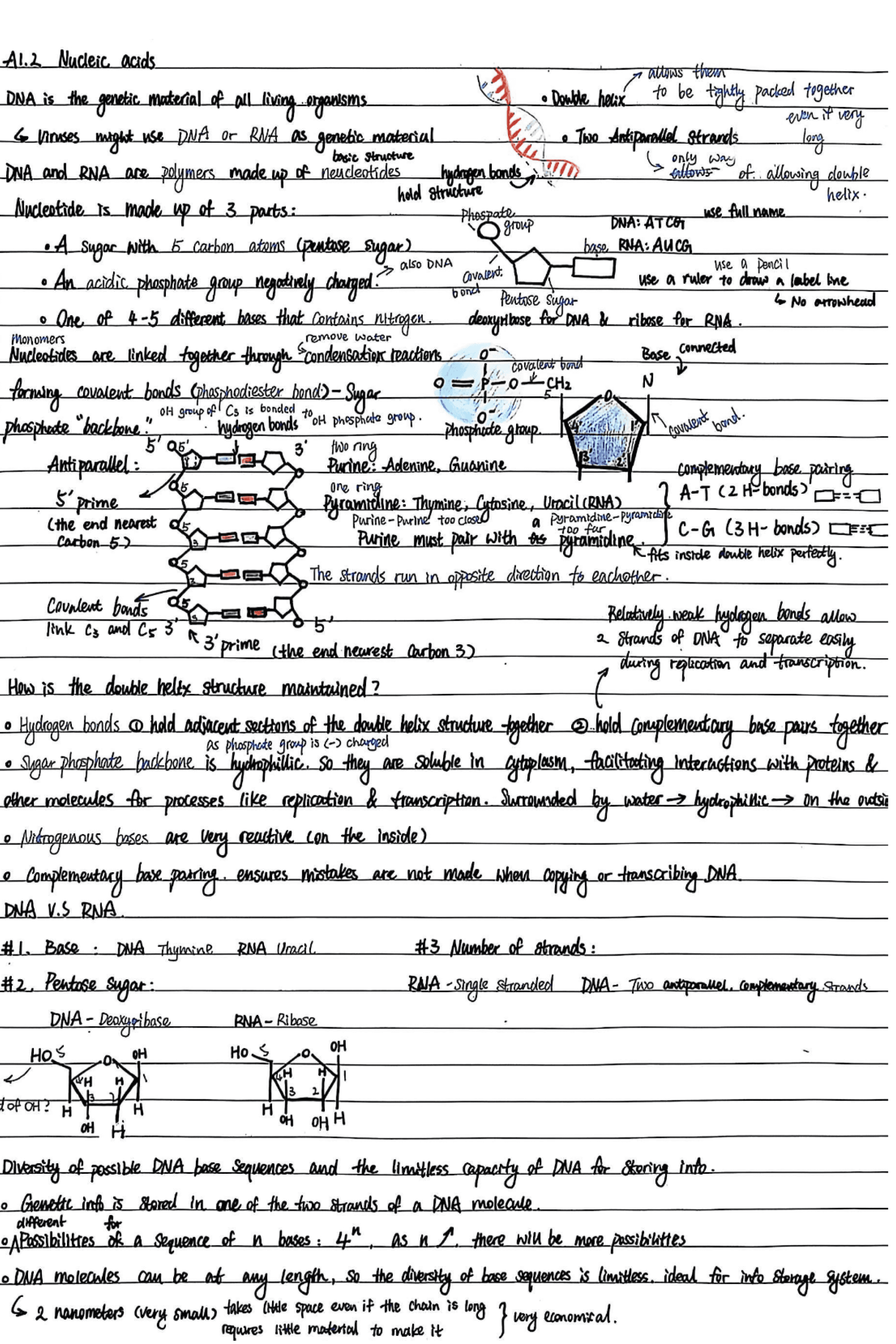
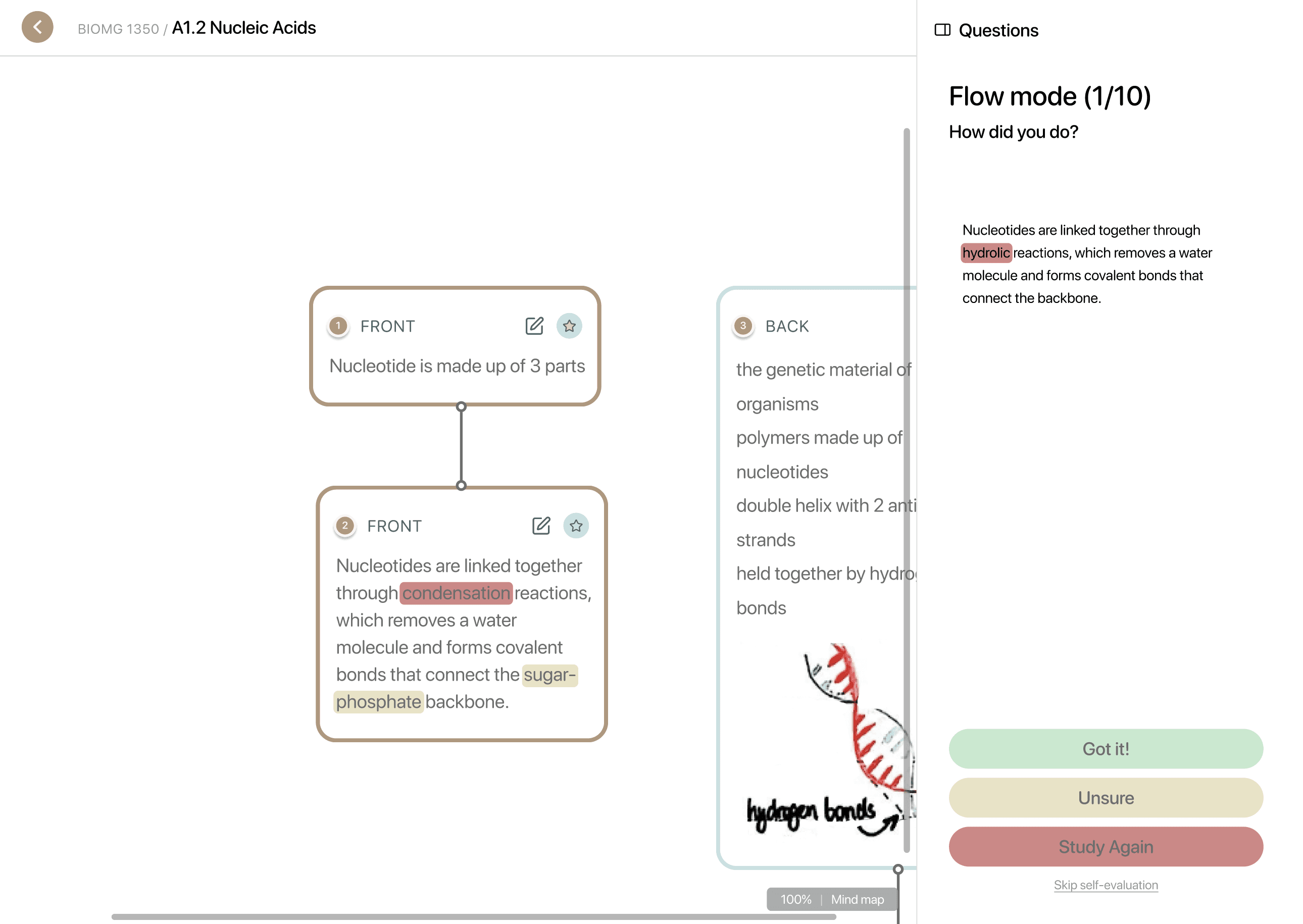
Nucleotide is made up of 3 parts
3
Back
the genetic material of all living organisms
polymers made up of nucleotides
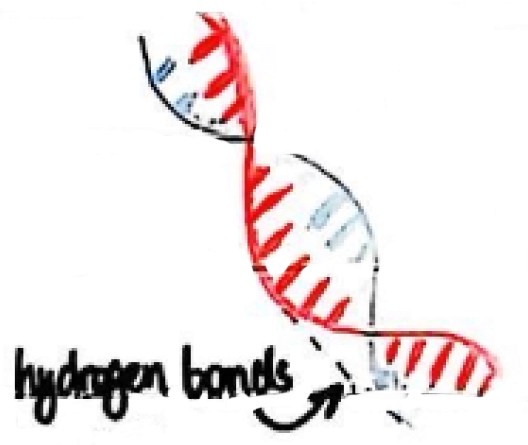
double helix with 2 antiparallel strands
held together by hydrogen bonds
2
Front
Nucleotides are linked together through...
4
Front
double helix function
4
Front
how is the double helix structure maintained?
6
Front
double helix
5
Back
only way of allowing double helix
5
Back
only way of allowing double helix
BIOMG 1350 / A1.2 Nucleic Acids
Search nodes
Edit mind map
Start study mode
Search nodes
100%
125% | 1 of 3
BIOMG 1350 / A1.2 Nucleic Acids
Create mind map
Nodes
Search nodes
3
AI
Front
DNA
Back
the genetic material of all living organisms
polymers made up of nucleotides
double helix with 2 antiparallel strands
held together by hydrogen bonds
IMAGE
4
AI
Front
double helix function
Back
allows DNA to be tightly packed together even if very long
Image
Add node(s)
2
3
AI
Front*
DNA
Back
the genetic material of all living organisms
polymers made up of nucleotides
double helix with 2 antiparallel strands
held together by hydrogen bonds
IMAGE
4
AI
Front*
double helix function
Back
allows DNA to be tightly packed together even if very long
Image
Add node(s)
2
Mind maps
ITAL 1201
Capitolo 3
5d ago
INFO 1300
Unit 5
3d ago
CS 1110
Prelim 1
2hr ago
nodus
Library
Profile
Your courses
ITAL 1201
INFO 1300
CS 1110
Study
Flashcard
Flow
AI Question
Recent mind maps
ITAL 1201
Capitolo 3
5d ago
INFO 1300
Unit 5
3d ago
CS 1110
Prelim 1
2h ago
Find courses and mind maps
New mind map


Welcome, Asa!
Courses
ITAL 1201
INFO 1300
CS 1110
Nodus: Easier active recital for students
2-minute summary
Problem space
Jump to any section
Design Innovation
Full Lifecycle Design
PROBLEM
Today, many students take notes on an iPad/notebook but memorize them with flashcards.
How might we help students study more efficiently by making it easier to create flashcards from notes?
APPROACHES
1
Intuitive integration of AI & OCR to maximize efficiency
2
Flexible settings to cater to user study habits
3
Easy navigation & onboarding to prevent overload
FEATURED SOLUTIONS
MILESTONES
200+ interface iterations
3 user flows prototyped
20+ reusable UI components
See full designs...
GO!
Asa is a college student studying biology. In class, she takes notes on her iPad…
DNA structure:
A
T
She draws diagrams of complex structures
DNA is in double helix
Why double helix:
A. Protects bases
B. Strong
She use indents to establish hierarchy
are single-stranded.
differences of RNA
has uracil instead of th
She draws between and connects different ideas
However, after class, she studies with digital flashcards.
She copies her exact notes again to make flashcards
Smart summary
Cancel
She distrusts the AI summarization function
Upload
Premium
She leaves her drawings and annotations behind
Like Asa, many students take notes in one way, but study from them in another. This change of format is time consuming and makes studying less effective.

Asa
BS in Biology
Asa takes notes on her iPad in class so she can draw complex biological structures. Later, she uses digital flashcards to memorize the scientific jargon.
PAIN POINTS
Copying her notes onto the flashcards platform is time consuming
She does not trust AI to make her flashcards
She cannot add her drawings and annotations to her flashcards
NEEDS & GOALS
A way to quickly make flashcards without using AI
A way to keep her drawings and annotations on her flashcards
Robert
BS in History
Robert uses a notebook. He keeps a table of contents at the front and draws mind maps to illustrate concepts. He uses flashcards after class.
PAIN POINTS
Flashcards no longer convey the logical relationship in mind maps
Flashcard sets can become unorganized and hard to navigate
His paper notes cannot be uploaded and processed into flashcards
NEEDS & GOALS
A way to preserve the mind map structure while making flashcards
A way to organize and quickly make flashcards from paper notes
Ideation
Design solutions
User research
Problem space
After conducting user research, we ideated the main features of our product to address the user pain points we collected.
To further validate our problem space, we conducted 6 user interviews and summarized common pain points students experience.
USER PAIN POINTS
PERSONAS
After many iterations, we proudly present our innovative active recital platform, Nodus!
COMBINING FLASHCARDS WITH MIND MAPS
Your mind map
3 - explanation
4 - concept
4 - idea
2 - idea
→
Flashcard 3
→
Flashcard 4
→
Flashcard 2
start testing
Concept 4
Idea 2
Concept 4
Idea 3
Explanation 3
Idea 4
Resolved pain point - Flashcards remove structure from notes
Flashcards are connected into a mind map
Each node on the mind map is a flashcard that can be flipped
This keeps the structure between different pieces of information
SCANNING NOTES TO MAKE MIND MAPS
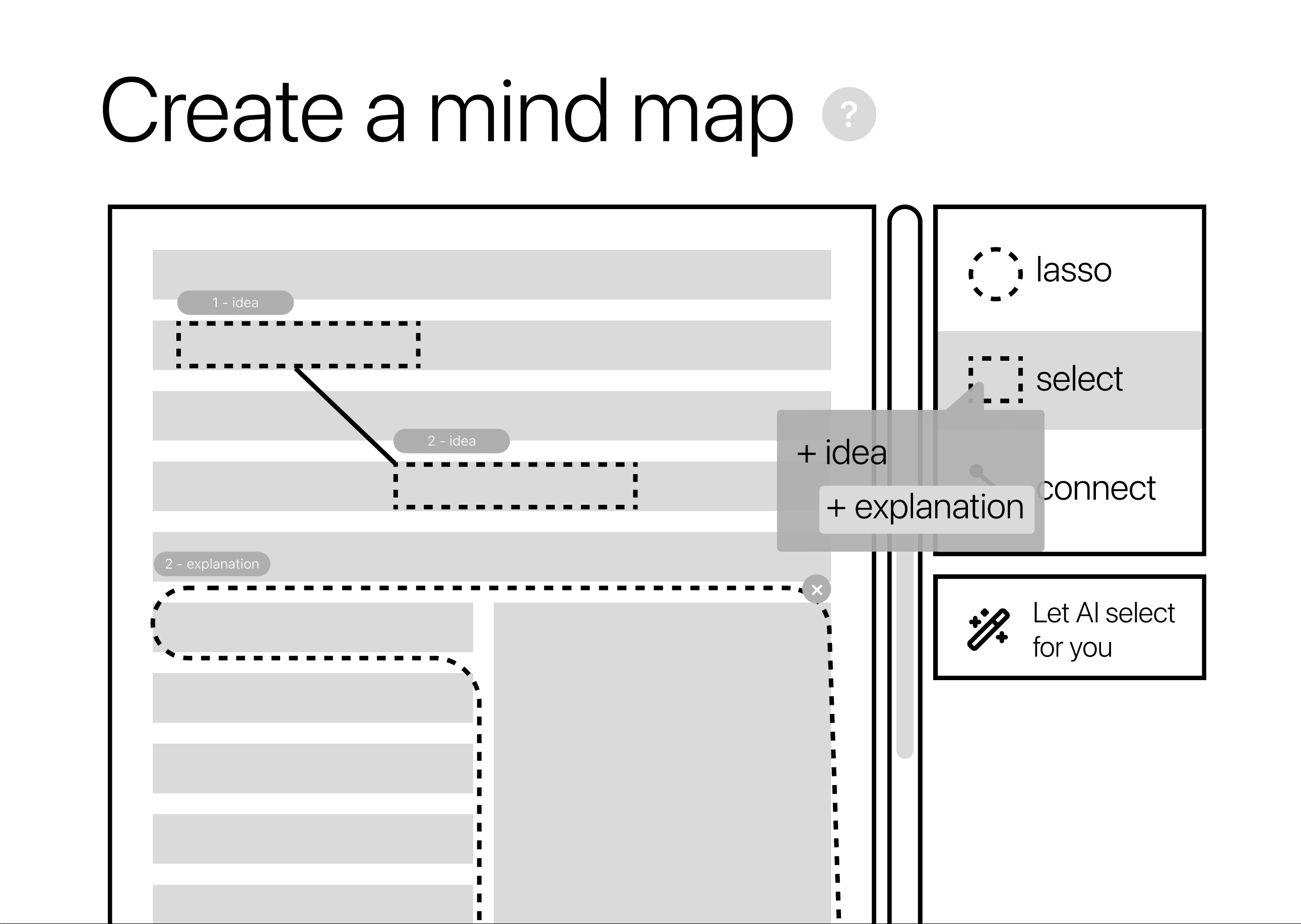
Resolved pain points - Making flashcards is time consuming, flashcards remove diagrams from notes, people do not trust AI
TESTING ONESELF WITHOUT CREATING QUESTIONS
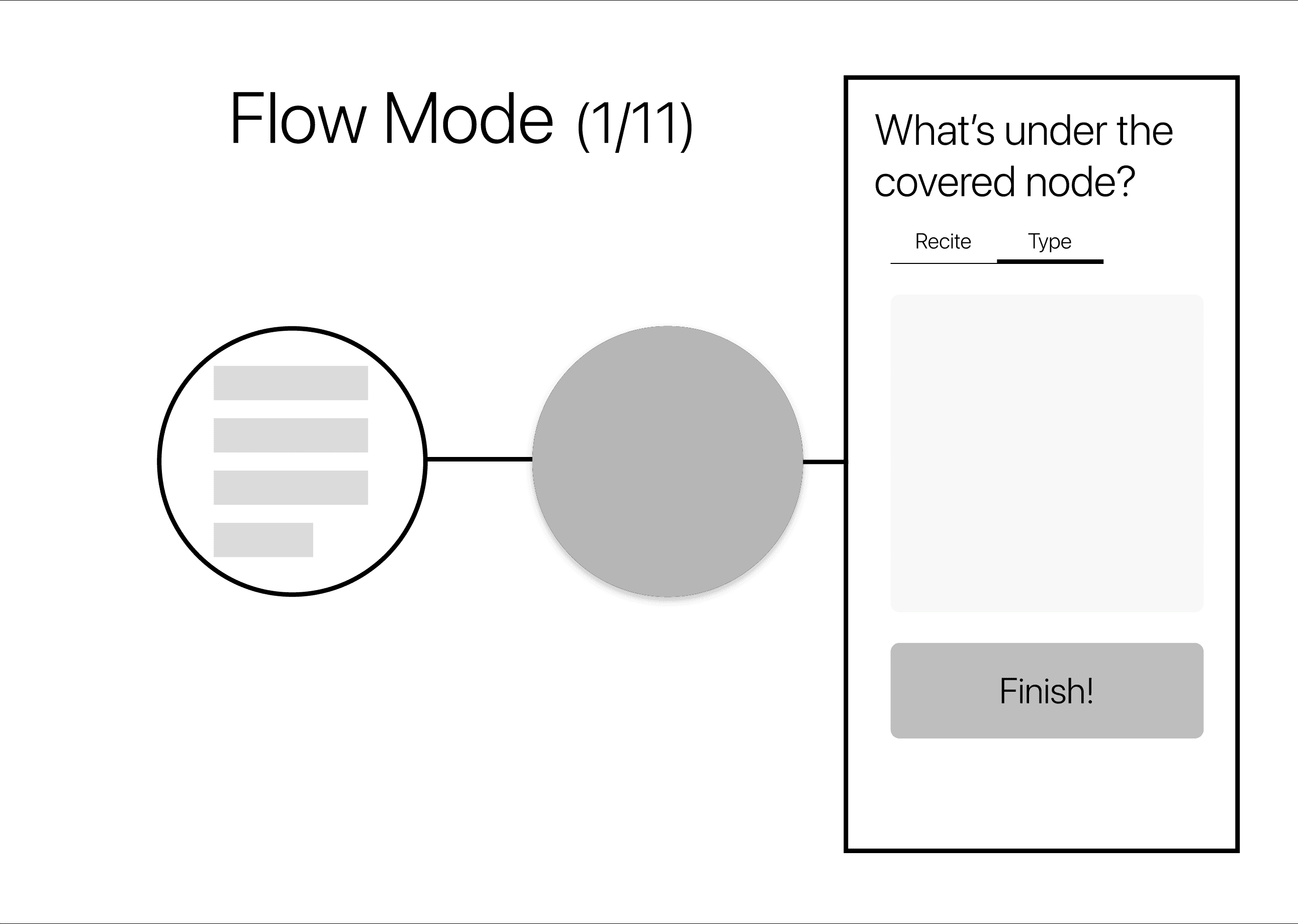
Resolved pain points - Making flashcards is time consuming
ORGANIZE CONTENTS USING SUBTOPICS
Resolved pain points - People prefer notes neatly organized by topic
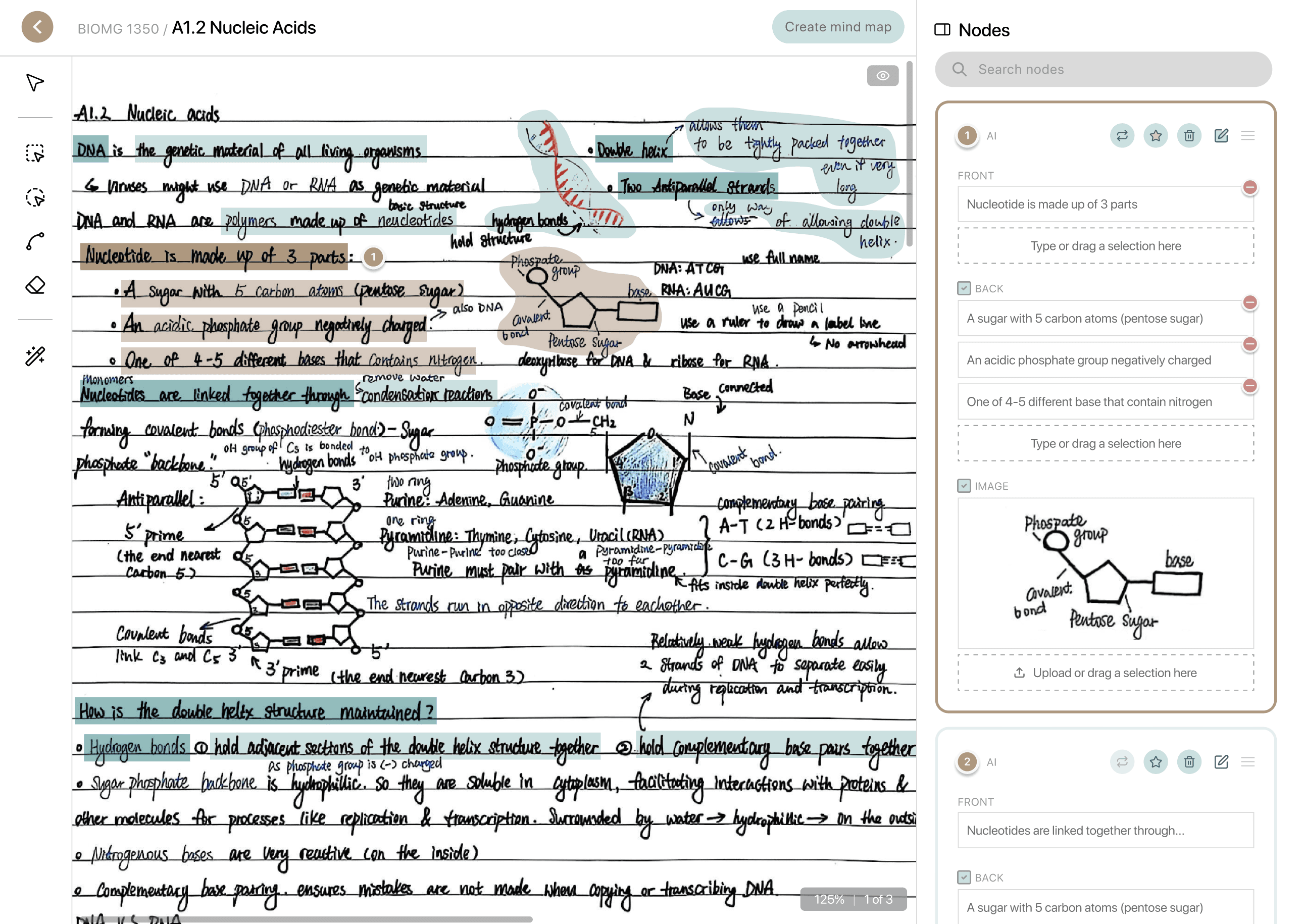
Nodus scans the user's notes, and the user selects what to put on each node
Users recall a node by looking at the previous one
Users organize their mind maps with different courses, making them easy to navigate
Images can also be scanned
Users can select nodes manually or with AI
They don't have to formulate questions as in making flashcards, which saves time
The user can also choose to use each node as a flashcard and formulate their question on one side of each node
Flashcards can be made quickly without having to copy notes around
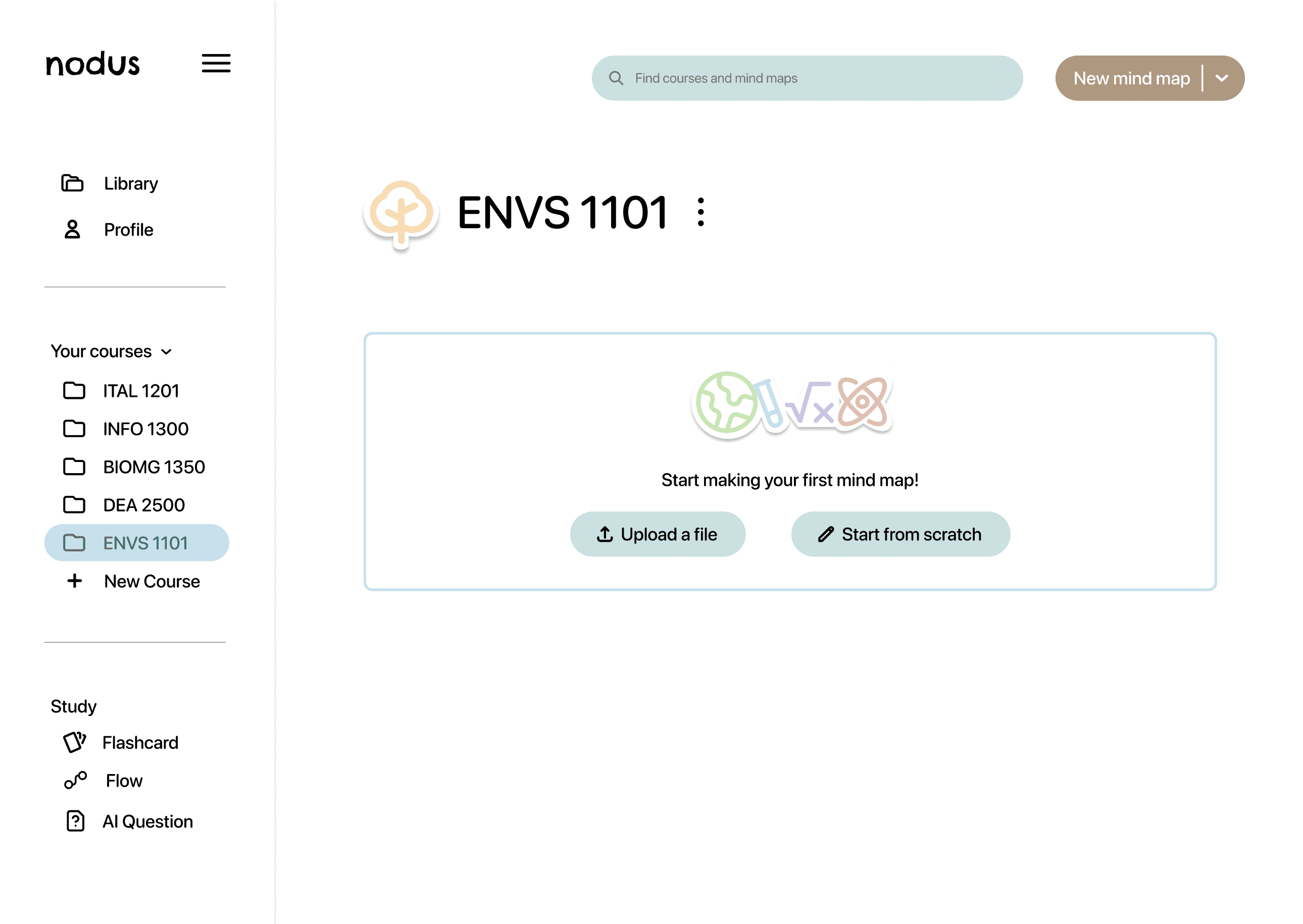
HOMESCREEN
ADDING A NEW COURSE
ONBOARDING FOR MIND MAP CREATION
KEY
CREATING A MIND MAP FROM NOTES
KEY
TESTING THE USER ON A MIND MAP
KEY
To understand our problem space, we invite you to meet Asa - a fictional student who is troubled by studying.
Ideation
User research
Final designs